
Guide, Product Spotlight
Centrefeed Roll Buying Guide: Sizes, Ply and Compatibility
Jun
If you manage the cleaning supplies for your business, you already know how fast your team goes through centrefeed rolls, or “blue roll.” It is an essential item used every day to wipe up spills and dry hands.
But buying whatever is closest or cheapest can be a costly mistake. If you buy rolls that are too thin, the staff will just use twice as much paper, causing your bills to skyrocket. And if you order the wrong size, the rolls won’t even fit inside your wall dispensers, leading to frustrating jams and wasted stock.
This guide is designed to help trade buyers choose the right centrefeed rolls for their specific workplace. We will break down ply, size, and dispenser compatibility so you get the best value for your budget.
What Is Blue Roll (Centrefeed Roll)?
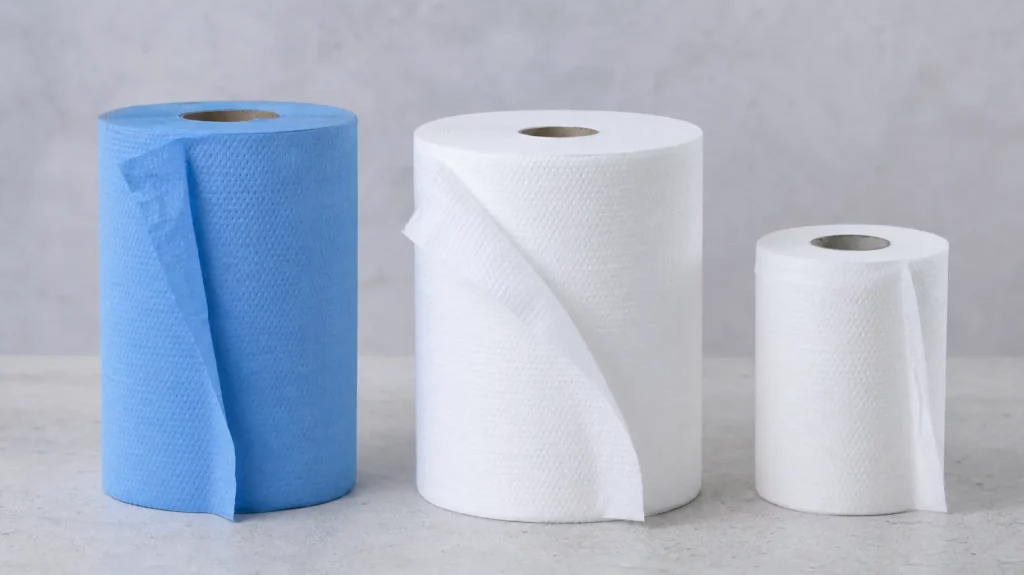
“Blue roll” is simply the everyday nickname for a centrefeed roll: a large roll of paper that dispenses from the middle rather than spinning on an open holder. The two terms describe the same product; “centrefeed” refers to how the paper is dispensed, and “blue” refers to the most common colour.
Centrefeed rolls are made by blending recycled and virgin pulp fibres, which are processed and treated to improve absorbency and wet strength. The distinctive blue colour comes from a food-safe dye, chosen because blue doesn’t occur naturally in food, so if a piece tears off into a dish it’s easy to spot and remove. Rolls are available in 1, 2 and 3-ply, and in both blue and white.
What Is Centrefeed Roll Used For?
Centrefeed roll is one of the most versatile wiping products in any building. Typical uses by setting:
- Households: Wiping kitchen and bathroom spills, drying hands, and cleaning appliances and surfaces as a hygienic alternative to reusable cloths.
- Commercial (cafés, restaurants, shops): Wiping tables, counters and food-prep areas, and cleaning up spills quickly to keep front-of-house tidy.
- Industrial (factories, workshops, forecourts): Mopping up oil and fluids and wiping down machinery, where strength and absorbency matter most.
- Medical and healthcare: Wiping surfaces, drying hands and managing spills, where its disposable, single-use nature helps reduce cross-contamination.
1-Ply vs 2-Ply: Which Thickness Do You Need?
When buying centrefeed rolls, the “ply” simply means how many layers of paper are bonded together to form a single sheet.
- 1-Ply Rolls: These are the thinnest rolls available and look cheaper upfront. However, because single-ply paper lacks absorbency, your staff will just pull twice as much paper to clean a small spill. This means you burn through rolls much faster, which actually wastes money in the long run.
- 2-Ply Rolls: This is the undisputed standard choice for businesses. It features two layers of paper, making it thick, highly absorbent, and strong when wet. Because it cleans up spills quickly, your team uses far fewer sheets per task, which keeps your overall paper costs down.
TOP TIP: Look for embossed 2-ply rolls. The embossed patterning creates tiny pockets of air between the two layers of paper, giving you much better absorbency without adding extra cost.
Sizes: Will the Roll Fit Your Dispenser?
A common procurement mistake is buying rolls that are too large for the wall units you already own.
There are two primary commercial sizes to choose from:
- Standard Rolls (Approx. 150m): These are large rolls with a wide diameter. They are built for full-sized, standard wall dispensers in high-use areas in busy commercial kitchens or warehouses.
- Mini Rolls (Approx. 60m): These are compact rolls designed for smaller dispensers in spaces with limited wall space, such as small washrooms or treatment rooms.
Always check your dispenser size before ordering refills. Forcing a standard roll into a mini unit is the number-one cause of jams and broken hardware.
Blue Roll vs White Roll: Does Colour Matter?
The colour of your paper roll isn’t just an aesthetic choice. It is usually tied directly to health and safety regulations within your specific industry.
We’ve broken down the main differences below to help you select the right roll for your team:
Why Businesses Choose Centrefeed Roll
- Colour-coded hygiene: The blue/white split supports colour-coded cleaning systems, which are essential in kitchens, hospitals and labs.
- Strong and absorbent: Durable enough for heavy-duty tasks without tearing or falling apart when wet.
- Tear-resistant and low-waste: Perforations allow single-sheet tearing, so staff take only what they need.
- Hygienic dispensing: The enclosed, centre-pull design keeps the rest of the roll protected from splashes and dirty hands, reducing cross-contamination.
- Eco-conscious options: Many rolls are made from recycled fibre; see our eco-friendly range.
How to Load a Centrefeed Roll
Unlike domestic kitchen rolls that spin on an open holder, commercial centrefeed rolls remain completely still inside an enclosed wall unit.
The paper pulls from the inside out, which keeps the rest of the roll totally protected from splashes, grease, and dirty hands.
To load a new roll correctly, follow these three simple steps:
- Find the Seam: Turn the roll upside down and look inside the inner cardboard tube to locate the perforated seam.
- Pull the Core: Give the cardboard core a sharp tug to collapse it inward, then pull the entire cardboard spiral completely out of the roll and throw it away.
- Thread the Paper: Find the loose paper tail left behind in the very middle of the roll. Twist it slightly into a point, open your wall unit, and feed it down through the bottom dispensing nozzle.
Once you click the dispenser door shut, your system is loaded, hygienic, and ready to go.
Choosing the right wall unit for your space? See our dedicated Blue Roll Dispenser Buying Guide.

Common Centrefeed Mistakes
Even when you buy high-quality stock, small usage mistakes can lead to major paper waste and broken hardware. Use our quick troubleshooting guide below to solve the most common stockroom headaches instantly:
| The Problem | The Real Cause | The Quick Fix |
|---|---|---|
| The paper keeps ripping inside the nozzle. | The staff are likely pulling the paper out sideways at a sharp angle, forcing it against the plastic teeth. | Teach your team to pull the paper straight down from the base of the unit for a clean, smooth tear. |
| The roll is unravelling from the outside. | The cardboard core was pulled out incorrectly, or the roll was dropped into the dispenser upside down. | The roll must sit flat. Ensure the starting paper “tail” is feeding strictly from the internal centre of the roll, spiralling downwards. |
| The paper leaves lint and dust on the glass. | You are using an embossed roll or a lower-quality 1-ply paper that sheds fibres when wet. | Switch to a smooth, un-embossed 2-ply roll. Smooth rolls are specifically designed to leave a smear-free finish on mirrors and chrome. |
| The dispenser door won’t click shut. | A standard full-sized 150m roll has been forced into a compact “Mini” dispenser casing. | Do not force it. You must use Mini 60m rolls for compact units to avoid compressing the paper and crushing the hardware. |
Real Cost-Per-Sheet vs Case Price
Do not just look at the price of the box. True savings come from how much paper you get and how fast you use it.
| Feature | Cheap 1-Ply | Premium 2-Ply |
|---|---|---|
| Upfront Cost | Lower price per box. | Slightly higher price per box. |
| Roll Length | Shorter (usually 100m). | Longer (usually 150m). |
| Usage | Staff use 4-5 thin sheets per wipe. | Staff use only 1 or 2 thick sheets. |
| The Result | You run out fast and reorder twice as often. | You get 50% more paper and save money over time. |
Buying higher-capacity rolls or investing in bulk pallet deals is always the most effective way for wholesale buyers to lower their long-term supply overheads.
Frequently Asked Questions
We’ve answered the top questions our commercial customers ask to help you avoid broken dispensers, clogged drains, and wasted paper:
No. Blue roll does not dissolve in water like toilet paper. Flushing it will quickly block your drainage system and lead to expensive plumbing bills.
This usually happens if you buy a standard 150m roll and try to squeeze it into a compact “Mini” dispenser. Always check your dispenser size before ordering refills.
Standard dispensers let people pull long streams of paper out of habit. Switching to a single-sheet dispenser forces the unit to pop out only one sheet at a time, cutting your waste by up to 40%.
Yes, but you need to choose an un-embossed 2-ply roll. Heavily embossed or cheap 1-ply rolls can leave small particles of paper lint on glass surfaces.
Blue roll is required by law in food prep and catering because it is easily spotted if a piece tears off into food. White roll is best for offices, clinics, and front-of-house washrooms where a premium look is preferred.
It depends on the specific material and your local recycling options. Check the manufacturer’s guidance for the product you buy.
Some rolls are designed to break down in composting facilities; others aren’t, due to treatments added during processing. Check the manufacturer’s guidelines before composting.
It varies by composition. Some rolls biodegrade over time and others don’t break down efficiently, so again check the manufacturer’s guidance.
Buy Centrefeed Rolls Online
We hope this guide helps you choose the right centrefeed roll for your workplace. At UK Cleaning Supplies we stock a full range of blue and white centrefeed rolls in 1, 2 and 3-ply, plus centre feed dispensers to match. Orders placed before 3pm receive next-day delivery.

UK Cleaning Supplies Expert Insights Team
Trusted Commercial Cleaning & Hygiene Solutions
UK Cleaning Supplies supports businesses, schools, and facilities nationwide with trade-grade products, wholesale cost savings, and professional advice.
Our Expert Insights Team brings together industry knowledge across commercial cleaning, chemical procurement, and facilities management to share practical guidance that helps you maintain a safer, cleaner, and more cost-effective working environment.