
May
We’ve all faced stubborn grease stains clinging to our kitchen surfaces that won’t go away no matter how much we scrub. We understand that this can be incredibly frustrating and make our kitchens look and feel dirty.
But don’t worry; this guide is here to help. It’s packed with everything you need to know to tackle grease in your kitchen. You’ll learn why grease is so tough to clean, the essential supplies you need, and step-by-step methods for effectively cleaning grease from your kitchen. By the end of this guide, you’ll be equipped with the knowledge and tools to keep your kitchen surfaces grease-free.
Understanding grease
What is grease?
In simple terms, grease is a thick and oily substance. In the kitchen, grease results from fat and oil residue building up on surfaces, appliances, and cooking utensils while preparing food. This grease comes from cooking oils, butter, and the fat in meats and other foods.
How grease accumulates in the kitchen?
In the kitchen, grease doesn’t just appear, it accumulates. As you heat up your delicious meals ( especially those rich in fats and oils), these substances transform into vapors that cling to nearby surfaces, creating a greasy mess.
Over time, this grease builds up, creating a sticky and difficult-to-clean residue.
Why is grease so hard to clean?
Grease is hard to clean because it’s made of oils and fats that don’t mix with water. This means you can’t just wash it away with water alone.
Also, grease is sticky and can trap dirt and debris, making it hard to remove as it clings to surfaces. This is why you need special degreasers or DIY deep-cleaning solutions to break it down and eliminate it.
Preparing for grease removal
Before tackling grease cleaning, it is crucial to consider safety precautions and gather the necessary supplies to remove grease.
Wear rubber gloves to protect your hands from becoming irritated by the grease. Another safety precaution is to ensure ventilation within the room by opening windows or using fans, which will prevent inhaling harmful vapours.
Grease cleaning supplies
Here’s a short list of the essential cleaning supplies you will need to remove grease.
Effective Methods for Removing Grease from Kitchen Surfaces
Grease buildup in the kitchen can be a real headache, but with the proper techniques, you can keep your kitchen sparkling clean and grease-free.
Ready to tackle that grease buildup? This section is your ultimate guide to effective grease removal. We’ll walk you through a basic surface cleaning routine, a deep cleaning method, and specific techniques for different kitchen surfaces and products.
Basic kitchen surface cleaning
Prep: Start by wiping down the surface with a dry cloth to remove loose debris and excess grease.
Apply Cleaner: Apply a degreaser or disinfectant to the surface, focusing on areas with stubborn grease buildup.
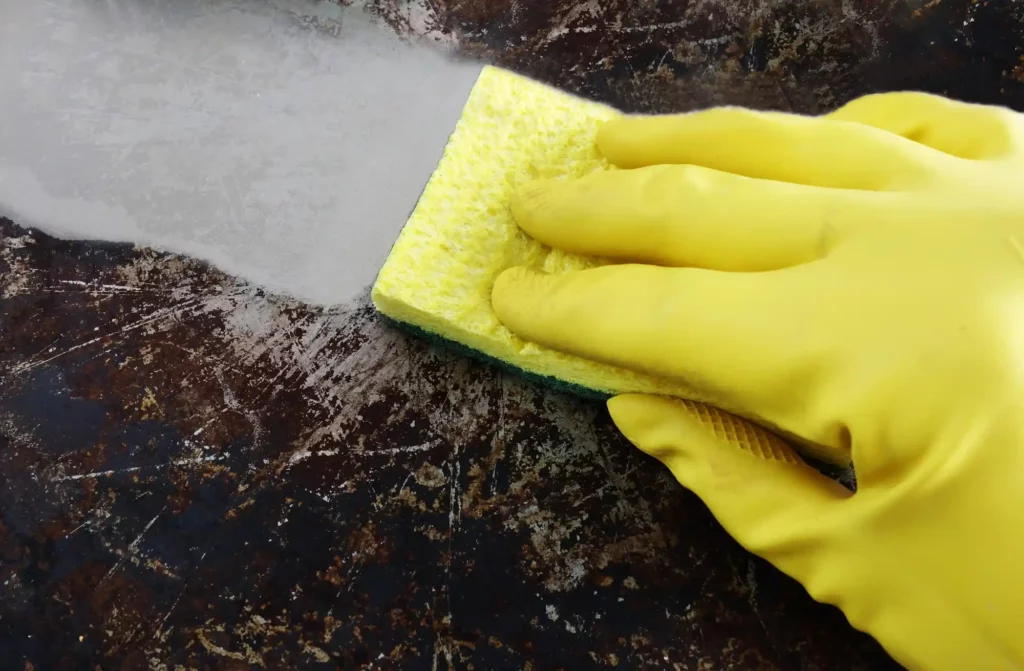
Scrub: Use a sponge or scrub brush in circular motions to loosen and lift off the grease.
Rinse and Dry: Wipe the surface with a damp cloth to remove any remaining residue, then dry thoroughly with a microfiber towel.
Removing grease from an oven
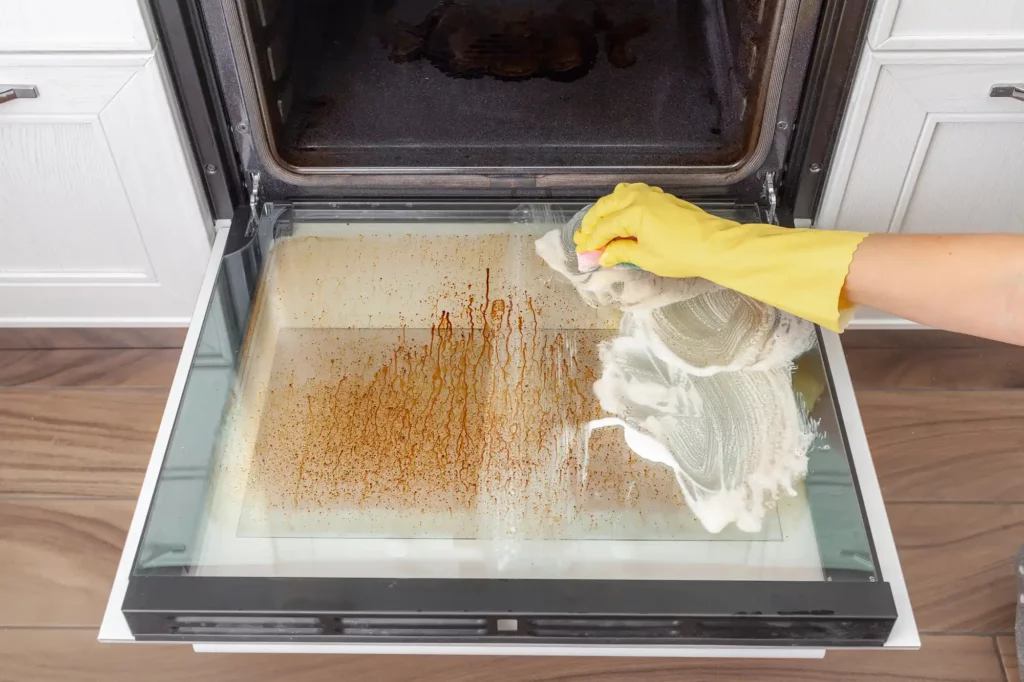
Prep: Ensure the oven is cool, then remove all racks and parts.
Apply Solution: Spread an oven degreaser or DIY solution of baking soda and water inside the oven, covering areas with grease.
Let it Sit: Allow the solution to sit for 15-20 minutes to loosen the grease.
Scrub: Using a damp sponge, scrub off the softened grease and residue.
Wipe and Dry: Wipe down the oven’s interior with a damp cloth to remove any remaining residue, then dry with a clean cloth.
Replace Racks: Once the oven is clean and dry, replace the racks and any other removable parts.
Removing grease from sinks and drains
Apply Degreaser: Pour a degreaser down the drain and let it sit for a few minutes to dissolve grease buildup.
Flush with Hot Water: After the degreaser has worked, flush the drain with hot water to rinse away dissolved grease and residue.
Manual Scrubbing: If grease remains, scrub the drain manually with a brush to remove stubborn buildup.
Cleaning grease from kitchen flooring
Choose Degreaser: Select a degreaser appropriate for your flooring type.
Mix Solution: Mix the degreaser with warm water according to the manufacturer’s instructions.
Scrub: Use a mop or sponge soaked in the degreaser solution to scrub the floor, paying extra attention to areas with heavy grease buildup.
Rinse: Rinse the floor thoroughly with warm water to remove any leftover degreaser and dissolved grease.
Preventing the buildup of grease
Preventing grease buildup in the kitchen is crucial for maintaining a clean and hygienic cooking environment. Regular cleaning will reduce the need for constant grease removal, saving time and effort and ensuring a healthier and more pleasant kitchen space for cooking and dining.
Best preventative measures:
- Regularly cleaning kitchen surfaces with hot, soapy water and disinfectant will remove grease before it accumulates.
- Use absorbent materials like paper towels to wipe down surfaces after cooking.
- Ensure proper ventilation to reduce the amount of airborne grease on surfaces.
- Practice good cooking habits, such as avoiding excessive frying or covering pots and pans while cooking, as this will minimise the amount of grease produced.

Keep your kitchen gleaming with grease cleaning
Cleaning grease from your kitchen can be a challenge, but this guide aims to simplify the process. We’ve explained what grease is and why it’s tough to clean. We’ve also shared the most effective methods for removing it from various surfaces. Before starting, remember safety first and ensure you have the right supplies. By following these tips, you can maintain a clean and pleasant kitchen for cooking.
Why not check out these relevant blogs:

How To Clean Ovens
Baked-on grease and carbonised food deposits create heavy smoke and ruin kitchen efficiency. Learn our [...]
Jan

The Ultimate Guide to Cleaning Stainless Steel Appliances
Smudges, grease deposits, and water spots quickly dull the look of smart stainless steel hardware. [...]
Dec
The Professional Guide to Floor Care: Best Practices for Home & Business
High foot traffic quickly strips away protective floor finishes, leaving expensive materials exposed to deep [...]
Aug

UK Cleaning Supplies Expert Insights Team
Trusted Commercial Cleaning & Hygiene Solutions
UK Cleaning Supplies supports businesses, schools, and facilities nationwide with trade-grade products, wholesale cost savings, and professional advice.
Our Expert Insights Team brings together industry knowledge across commercial cleaning, chemical procurement, and facilities management to share practical guidance that helps you maintain a safer, cleaner, and more cost-effective working environment.