Guide, Product Spotlight, Tips
A Complete Guide to COSHH: Cleaning Supplies, Symbols & Safety
Jan
If you work with cleaning products, chemicals or substances that could be harmful, you’ve probably come across the term COSHH. But what does it actually mean, and how does it apply in real working environments?
This guide explains what COSHH is, why it’s important, and how it applies to the use of cleaning chemicals.
It also covers COSHH hazard symbols, UK legal requirements, risk assessments and training, all explained in simple, practical terms.
What is COSHH?
COSHH stands for Control of Substances Hazardous to Health. It is a UK regulation designed to protect people from health risks caused by hazardous substances.
These substances include many cleaning chemicals such as disinfectants, detergents, degreasers and aerosols.
COSHH does not ban the use of hazardous substances. Instead, it require safe use, storage, and management to reduce the risk of injury, illness, or long-term health problems.
Why is COSHH Important?
Cleaning chemicals can cause harm if they are misused, mixed incorrectly, or handled without proper precautions. COSHH exists to reduce these risks.
Improper use of cleaning chemicals can lead to risks such as:
- Skin irritation or chemical burns
- Eye damage
- Breathing problems
- Long-term health conditions
By following COSHH guidance, workplaces can:
- Protect employees, cleaners and building occupants.
- Reduce accidents and illness.
- Promote safe handling of cleaning supplies.
- Meet UK health and safety legal requirements.
COSHH Legislation (UK Regulations Explained)
COSHH is part of the UK Health and Safety law and is enforced by the Health and Safety Executive (HSE).
Under the COSHH Regulations, employers and those in control of workplaces have a legal duty to:
- Identify hazardous substances used at work.
- Assess the risks they pose to health.
- Put suitable control measures in place.
- Provide information, training and PPE where required.
These responsibilities apply to cleaning chemicals that are used regularly, occasionally, or even just stored on site.
Who Needs to Comply with COSHH?
COSHH applies to any UK workplace where hazardous substances are used, stored or produced.
This includes employers and business owners across sectors such as commercial cleaning, facility management, education, healthcare, care homes, offices, retail and hospitality, as well as self-employed cleaners.
If cleaning products are used as part of a work activity, complying with COSHH is a legal requirement.
While COSHH does not apply to private household use, the same safety principles can still help people use strong or professional-grade cleaning products more safely at home.
PPE requirements under COSHH
Personal Protective Equipment (PPE) is often required as a control measure identified through a COSHH risk assessment.
When working with cleaning supplies, PPE may include:
- Protective gloves
- Eye protection
- Masks or respirators for sprays or fumes
COSHH Hazard Symbols Explained
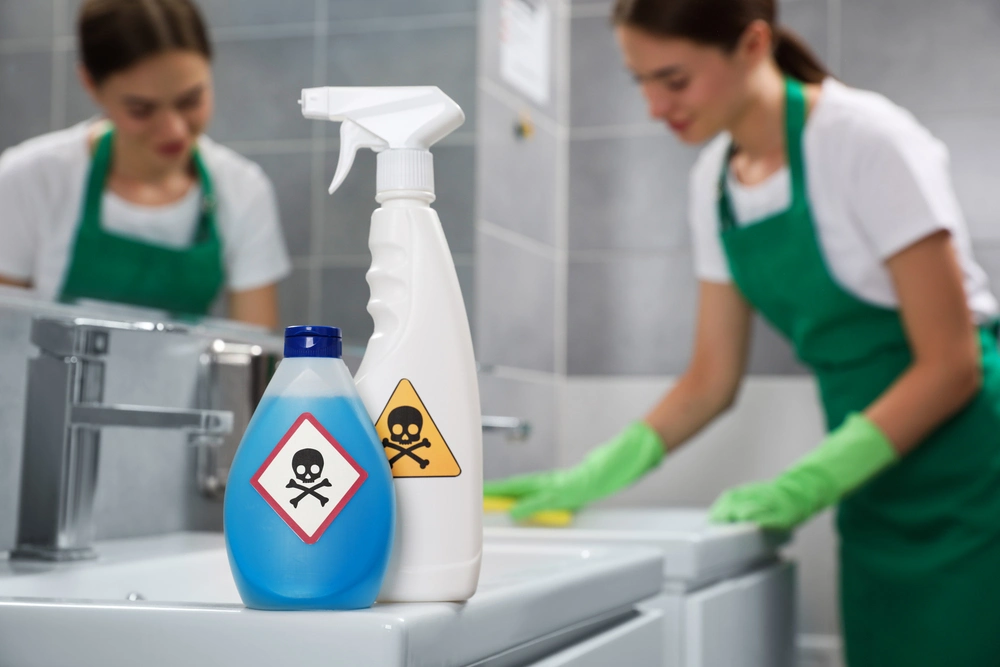
COSHH hazard symbols appear on cleaning product labels to highlight potential risks and help users understand how to use products safely.
These symbols are found on both commercial and household cleaning products, so it is important to understand them.
Common COSHH hazard symbols include:
Flammable
This symbol means the product can catch fire easily. Keep it away from heat, sparks and open flames.

Corrosive
Corrosive products can burn the skin and damage the eyes. Avoid direct contact and use protective gloves when needed

Toxic
This symbol shows that the product can be dangerous if inhaled, swallowed or absorbed through the skin. Always follow the instructions carefully.

Harmful / Irritant
Products with this symbol may cause skin or eye irritation, or discomfort if inhaled. Avoid prolonged contact and use with care.

Serious Health Hazard
This symbol warns of long-term health risks, such as breathing problems or organ damage. Use these products carefully and follow safety guidance.

Oxidising
Oxidising products can make fires burn more strongly. Do not mix them with other cleaning chemicals.

Gas Under Pressure
This symbol is used on aerosols and pressurised containers. Do not puncture or expose them to high heat.

Environmental Hazard
Products with this symbol can be harmful to the environment, especially aquatic life. Dispose of them responsibly.

Remember: Always read product labels and follow safety instructions before use.
COSHH Hazard Symbols vs CLP Labels
COSHH is often confused with CLP (Classification, Labelling and Packaging).
- CLP controls how chemicals are classified and labelled with hazard symbols
- COSHH focuses on how those substances are safely used in the workplace
In simple terms, CLP tells you what the hazards are, and COSHH tells you what you must do about them. Together, they help ensure cleaning products are clearly labelled and used safely.
How to Conduct a COSHH Risk Assessment
A COSHH risk assessment helps identify hazards associated with cleaning supplies and put controls in place to reduce risk.
A typical risk assessment involves:
1. Identifying hazardous cleaning products
2. Assessing who may be harmed and how
3. Implementing control measures such as safe storage, PPE and training
4. Recording findings
5. Reviewing assessments regularly
Risk assessments should be updated whenever new products are introduced or working practices change.
COSHH Training
Understanding COSHH in theory is one thing; putting it into practice safely is another.
COSHH training helps people understand hazard symbols and labels, recognise the risks linked to cleaning chemicals, use products safely and correctly, and carry out or follow COSHH risk assessments.
That’s why training is an important part of any health and safety program where hazardous cleaning supplies are used.
For those looking to formalise their understanding, a COSHH Awareness Course can be extremely helpful. Our sister company, Power Hygiene, offers a free COSHH training course for cleaners.
This course covers key COSHH principles, hazard recognition and safe handling of cleaning chemicals.
Start free coshh trainingFrequently Asked Questions
Yes. COSHH is a legal requirement in the UK for workplaces that use hazardous substances, including cleaning chemicals.
Yes. Eco-friendly products can still fall under COSHH if they contain substances that could be harmful to health.
Not following COSHH rules can lead to accidents, health problems, fines or legal action.
Yes. COSHH uses hazard symbols from the CLP labelling system to show the risks linked to a product.

UK Cleaning Supplies Expert Insights Team
Trusted Commercial Cleaning & Hygiene Solutions
UK Cleaning Supplies supports businesses, schools, and facilities nationwide with trade-grade products, wholesale cost savings, and professional advice.
Our Expert Insights Team brings together industry knowledge across commercial cleaning, chemical procurement, and facilities management to share practical guidance that helps you maintain a safer, cleaner, and more cost-effective working environment.