

Jun
Noticed cloudy marks on your showers or stubborn white spots on your tap? You’re probably dealing with hard water stains, which is a common household issue across the UK. While these stains are an eyesore, they can also be tricky to remove without the right technique and products.
In this guide, we’ll cover everything you need to know:
- What hard water stains are
- What causes them
- The types of surfaces that they affect
- Tools you’ll need
- How to remove them effectively
- How to prevent them from coming back
What are hard water stains?
Hard water stains are caused by mineral deposits, particularly calcium and magnesium, found in water with a high mineral content.
When this water dries on a surface, it leaves behind a residue known as limescale. These stains commonly develop on materials like glass, chrome, and ceramic tiles.
Without regular cleaning, the mineral deposits can accumulate and build, making it harder to remove and potentially leading to damage to surfaces.

What causes hard water stains?
Hard water stains are caused by mineral-rich water evaporating and leaving behind calcium and magnesium.
As the residue builds up, it can dull the appearance of surfaces and become harder to remove.
These stains are especially common in areas where water is frequently left to dry, such as shower screens, taps, sinks and toilets.
Why is hard water more common in certain areas of the UK?
Hard water is especially common in southern and eastern regions of the UK, where water passes through chalky limestone rocks. This is the case in London, Kent, Essex and parts of the Midlands.
Homes in these areas will tend to experience more frequent limescale build-up and may need specialist cleaning products.
What surfaces can hard water stains affect?
Hard water can leave its mark on a wide variety of surfaces throughout the home, especially in bathrooms and kitchens. Here are some of the most commonly affected materials:
- Glass: shower doors, windows and bathroom mirrors
- Ceramic & porcelain: toilets, sinks, tiled floors and walls
- Chrome & stainless: taps, showerheads, kitchen sinks and towel rails
- Plastic & acrylic: shower trays, bathtubs and some appliances
- Natural stone: marble, granite or slate countertops or tiles
- Rubber seals: around sinks, baths and windows
- Appliances: such as kettles, washing machines and dishwashers
Tools you’ll need to remove hard water
Before you start cleaning and removing hard water stains from your home or commercial space, gather the following supplies:
- Microfibre cloths
- Non-scratch sponges
- Spray bottles
- Rubber gloves
- Squeegee
- Limescale remover
- Heavy-duty hard surface cleaner such as Strongarm
Shop Supplies to remove hard water stains:
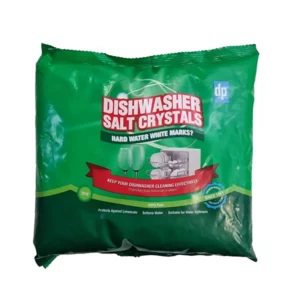
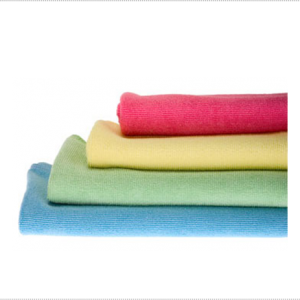
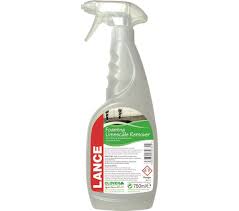
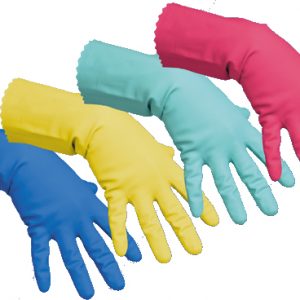
How to remove hard water stains
While hard water stains can be stubborn but with the right products and methods, you can easily restore your surfaces to looking their best. The trick is to use cleaning products and techniques that suit each type of surface.
Whether you’re tackling glass, showerheads and taps, bathroom fixtures or appliances, these simple tips will help you remove hard water deposits quickly and safely.
Removing hard water stains from glass
- Spray a commercial glass cleaner with limescale remover directly onto the stained glass.
- Let it sit for 10-15 minutes to break down the mineral deposits.
- Wipe stains gently with a microfibre cloth or non-scratch sponge using circular motions.
- Rinse with clean water and dry thoroughly with a cloth to avoid streaks.
Removing hard water stains from showerheads and taps
- Submerge the showerhead or taps in a solution of commercial limescale remover or white vinegar by securing a plastic bag filled with the solution around the fixture.
- Leave to soak for 30 minutes, up to 1 hour, to allow the buildup to dissolve.
- Remove the bag and scrub any remaining deposits with a sponge or small brush.
- Rinse thoroughly with warm water and dry to restore shine.
Removing hard water stains from bathroom fixtures
- Spray a commercial bathroom cleaner designed to remove limescale and hard water stains onto sinks, toilets and bathtubs.
- Let it sit for 10 minutes to penetrate tough stains.
- Scrub gently with a soft-bristle brush or sponge, taking care not to scratch surfaces.
- Rinse with clean water and wipe dry to prevent water spots.

Tips for preventing hard water stains
Prevention is easier than constant scrubbing and cleaning of hard water, so here is our top recommendations for keeping stains at bay:
- Wipe surfaces dry after use, especially glass and stainless steel taps
- Install a water softener if you live in a hard water area
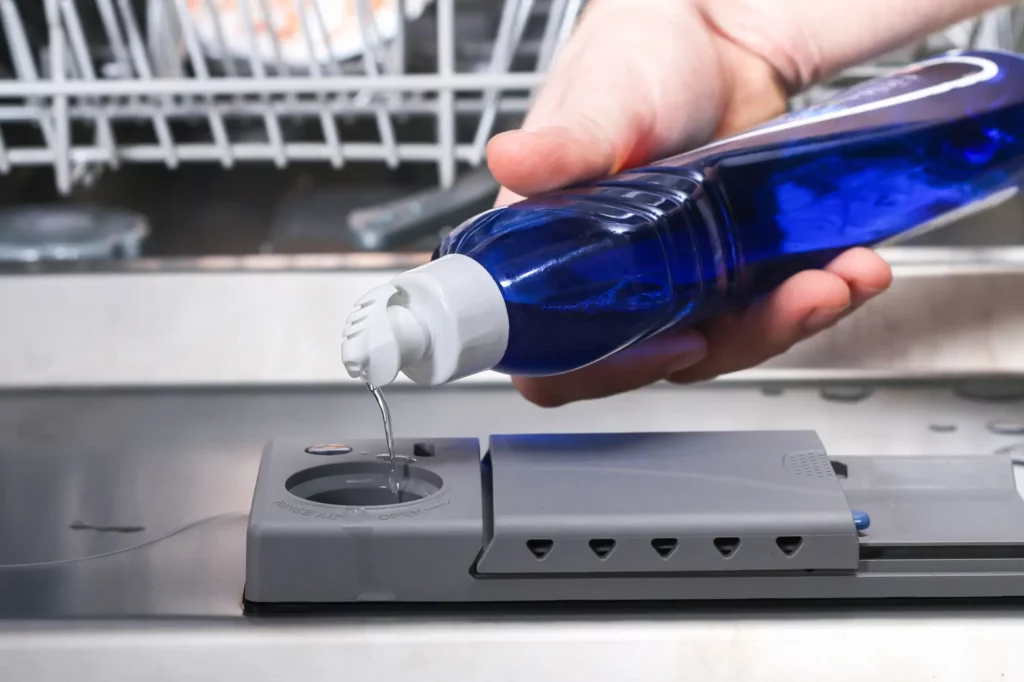
- Use rinse aids in dishwashers to reduce mineral residue
- Ensure regular cleaning before stains become stubborn
- Apply a water-resistant protective coating to glass or chrome to repel water
- Use distilled water in small appliances
Say goodbye to stubborn hard water stains
Hard water stains may be a common nuisance, but with the right knowledge and tools, they don’t have to be a permanent problem.
By understanding what causes these stains and how to tackle them effectively, you can keep your home surfaces looking clean and sparkling. Remember, keeping on top of things with regular maintenance and simple preventive steps goes a long way in reducing limescale buildup.
With a little effort and the right approach, you’ll be able to enjoy spotless surfaces and a fresher, more inviting home every day.

UK Cleaning Supplies Expert Insights Team
Trusted Commercial Cleaning & Hygiene Solutions
UK Cleaning Supplies supports businesses, schools, and facilities nationwide with trade-grade products, wholesale cost savings, and professional advice.
Our Expert Insights Team brings together industry knowledge across commercial cleaning, chemical procurement, and facilities management to share practical guidance that helps you maintain a safer, cleaner, and more cost-effective working environment.