
Eco Friendly, Kitchen, Product Spotlight
What Are The Best Food Waste Bags?

Jul
Food waste can quickly become messy and smelly, but managing it doesn’t have to be a hassle.
Choosing the right food waste bags makes it simple to keep your home or business clean while reducing environmental impact.
In this guide, we’ll explore the UK’s food waste disposal rules, explain the types of bags that work best, and share tips on what to put in your food waste bags for optimal results.
Why is Food waste disposal important?
Properly disposing of food waste is important for several reasons. It helps protect the environment, keeps your space clean, saves money and supports recycling efforts. Here are the main benefits:
- Protects the environment: Reduces landfill waste and lowers greenhouse gas emissions.
- Improves Hygiene: Prevents unpleasant smells and stops pests like flies and rodents.
- Saves money: Proper food waste disposal can mean fewer bin collections and better use of bin space, saving you money.
- Supports recycling goals: Helps meet UK government targets by turning food waste into compost or energy.
Using the right food waste bags makes the disposal process easier and cleaner, helping you manage your waste more effectively while doing your part for the environment.
UK Government Rules on Food Waste Disposal
The UK government is committed to reducing food waste by half by 2030. Under The Environment Act 2021, homes, schools, restaurants and businesses must separate food waste from other rubbish.
One important rule is that all workplaces, even those without a kitchen or food service, must collect food waste, regardless of the amount.
Food waste includes:
- Leftover food from staff or customers
- Fruits and vegetable scraps (e.g. banana skins)
- Coffee grounds and tea bags
Most councils now also require the use of compostable liners that meet the EN13432 standard, as these food waste bags break down during composting, making them more environmentally friendly than regular plastic bags.
Compostable Bin liners: what are they and why do they matter?
When it comes to food waste bags, not all bags are the same. It’s important to understand the difference between biodegradable and compostable bags.
- Biodegradable bags break down over time, but not always quickly or safely enough for composting.
- Compostable bags are made to fully break down in composting conditions, leaving no harmful residues behind.
Most compostable bags are made from plant-based materials, such as cornstarch, which helps reduce plastic pollution.
When purchasing bags for your compost bin, look for trusted logos, such as the seedling logo, to ensure they meet composting standards. These bags not only break down fully in composting, but they also leave no harmful residue behind.

What makes a great food waste bag?
A good waste bag should be the right size, strong and easy to use. It should also be certified compostable to ensure it breaks down properly and is environmentally friendly.
Here’s what to look for:
- The right size to fit your bin or food caddy ( e.g. 7L, 10L, 25L )
- Certified compostable, with EN13432 or similar approval
- Leak-proof to stop spills
- Strong and tear-resistant
- Easy to tie or seal to lock in smells and keep pests out
- Comes in roll format for easy storage and use
Top food waste bag recommendations
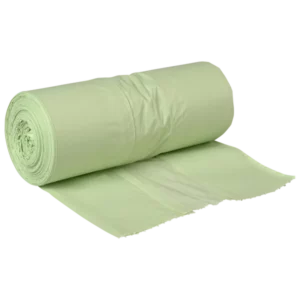
At UK Cleaning Supplies, we offer a wide range of green compostable food waste bags to suit everything from small kitchen caddies to large commercial bins.
All of our bags are EN13432 certified, meaning they’re fully compostable and accepted by most UK councils for food waste collections.
To help you choose the right option, here are some recommendations based on your needs:
For Households and Small Food Caddies:
We offer bags from 7L to 25L that fit most kitchen caddies and small bins. They are strong, leak-proof, and easy to tie. These bags are ideal for daily food waste, such as fruit skins, coffee grounds, and leftovers.

How to use and manage food waste bags
To get the most out of your compostable food waste bags and keep your kitchen clean and odour-free, follow these simple tips:
- Use the correct size bag to line your bin or caddy for a secure fit and easy removal
- Avoid overfilling to prevent splitting or leakage
- Let hot food cool before disposing of it, and avoid sharp items that could tear the bag
- Replace food waste bags every 2-3 days to minimise odours and maintain hygiene
- Store spare compostable bags in a cool, dry place to keep them in good condition

What you can and can't dispose of in your food waste bin
| You CAN dispose of | You CAN’T dispose of |
|---|---|
| Fruits and vegetable peelings | Plastic or non-compostable packaging |
| Eggshells | Liquids such as oil, milk or soup |
| Plate leftovers | Nappies or sanitary items |
| Meat and fish scraps | Animal waste |
| Coffee grounds and tea bags | Any non-food materials |

UK Cleaning Supplies Expert Insights Team
Trusted Commercial Cleaning & Hygiene Solutions
UK Cleaning Supplies supports businesses, schools, and facilities nationwide with trade-grade products, wholesale cost savings, and professional advice.
Our Expert Insights Team brings together industry knowledge across commercial cleaning, chemical procurement, and facilities management to share practical guidance that helps you maintain a safer, cleaner, and more cost-effective working environment.