Guide, Product Spotlight
What Are the Most Powerful Cleaning Chemicals? Types, Uses and Safety Tips
Jul
When it comes to keeping your home or business clean, sometimes standard cleaning sprays or wipes just aren’t enough.
Whether you’re disinfecting , removing limescale in the bathroom, or scrubbing grease in a commercial kitchen, knowing which product to use makes all the difference.
In this guide, we will cover the following:
- The four main types of cleaning agents
- The most powerful chemical cleaners and their ideal uses
- What is COSHH and why it matters
- How to read warning labels
- How to choose the right product for your cleaning needs
The Four Main Types of Cleaning Agents Explained
Cleaning products come in a range of strengths, each designed to handle different kinds of dirt and mess. Understanding the main types of cleaning agents makes it easier to pick the right one and clean more effectively.
Here’s a quick guide to the four main categories:
Detergents:
Detergents are the most common cleaning agents found in everyday cleaners, such as washing-up liquid and surface sprays. They break down grease, dirt and oil and are safe for regular use around the house.
Degreasers:
Degreasers are specially formulated to cut through tough, baked-on grease and oily residues, especially in kitchens and garages. They are stronger than detergents and are ideal for cleaning ovens and machinery.
Abrasives:
Abrasives remove dirt by scrubbing, using either rough particles or strong cleaning agents. They’re great for removing stubborn grime and rust, but be careful using them on delicate surfaces to avoid scratches.
Acids:
Acid-based cleaners are powerful cleaning agents that break down limescale, rust and mineral buildup. They are used in common cleaning products such as toilet cleaners and descalers. Acid cleaners must always be handled with care due to their corrosive nature.
Top Powerful Chemical Cleaners and Their Best Uses
Now that we’ve covered the main categories of cleaning agents, it’s helpful to look at specific chemical cleaners that fall into these groups.
Below is a breakdown of some of the most powerful cleaning chemicals, including their intended uses, the type of agent they are, and the precautions to keep in mind when using them.
| Chemical | Example | Type | Best For |
|---|---|---|---|
| Bleach | Household bleach | Acid | Killing germs, mould, bathroom cleaning |
| Hydrogen Peroxide | Stain Remover, Disinfectant Spray | Acid | Disinfecting surfaces, whitening stains |
| Ammonia | Glass Cleaner | Degreaser | Cutting through grease, cleaning glass and tiles |
| Isopropyl Alcohol | Hand Sanitiser | Detergent | Killing germs on hands, cleaning electronics |
| Enzyme Cleaners | Pet Stain Removers | Detergent | Breaking down organic stains |
| Caustic Soda | Oven Cleaner | Degreaser | Removing heavy grease |
| Sodium Hydroxide | Drain Cleaner | Degreaser | Unblocking drains |
| Quaternary Ammonium Compounds (Quats) | Surface Cleaners | Detergent | Disinfecting surfaces in healthcare/food industry |
Remember: Always follow product instructions, wear protective gear if needed, and keep the area well-ventilated for safe cleaning.
Understanding COSHH: Why Cleaning Chemical Safety is Essential
COSHH stands for Control of Substances Hazardous to Health, and it is a set of regulations in the UK designed to protect people from the dangers of hazardous substances, including cleaning chemicals.
Whether you’re cleaning at home or in the workplace, understanding COSHH means you’re more likely to handle chemicals safely.
Many cleaning products contain ingredients that, if used the wrong way, can cause problems like:
- Skin irritation or burns
- Breathing issues such as asthma or allergies
- Poisoning if swallowed or inhaled
- Eye irritation or damage
Following COSHH guidelines helps reduce these risks and keeps everyone safe. Businesses, in particular, have a legal responsibility to comply with COSHH to protect their staff.
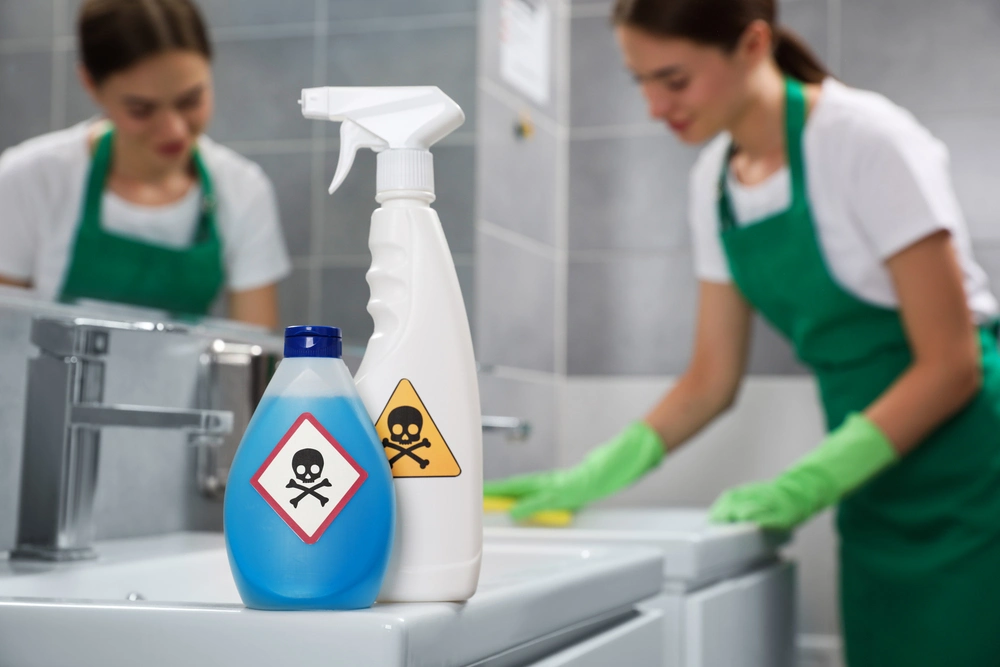
An important part of COSHH compliance is understanding the warning labels on cleaning products. These labels show hazard symbols and safety advice to help you use chemicals safely. If you want to learn more about reading these labels, check out our detailed Guide to Cleaning Chemical Labels.
How to Choose the Right Cleaning Chemical for Your Specific Needs
Choosing the right cleaning chemical comes down to three factors: what you’re cleaning, the surface you’re working with, and how strong the product needs to be.
Using a cleaner that’s too harsh can cause damage or be unsafe, while one that’s too gentle might not clean well enough. Below, we’ve shared some simple tips to help you choose the right product for the job.
1. Match the Product to the Task
Different messes need different types of cleaners:
- For everyday dirt and light messes: Use a gentle detergent or multi-purpose cleaner.
- For greasy or burnt-on grime: Choose a degreaser or heavy-duty cleaner.
- For killing germs: Use disinfectants like bleach or hydrogen peroxide.
- For stains or odours: Try enzyme-based cleaners or mild abrasives, such as baking soda.
2. Think About the Surface
Not all surfaces can handle the same kind of cleaning chemicals.
Delicate materials, such as painted wood and soft furnishings, will require gentler cleaning to avoid damage. On the other hand, harder surfaces, such as stainless steel or sealed floors, can handle stronger chemicals.
Always check the label or test a small area first, just to be safe
3. Choose Products That Are Safe for Your Home
Some cleaning products can be harsh, especially for households with children, pets, or anyone with allergies. In these cases, go for low-toxicity or non-toxic options whenever possible.
Always ensure the area is well-ventilated during and after cleaning. Whenever possible, opt for eco-friendly cleaners that break down naturally and are less harsh on the environment.

Make the Most of Powerful Cleaning Chemicals
Powerful cleaning chemicals are ideal for tackling tough dirt, grease, stains, and germs, whether you’re cleaning at home or in a business setting. Knowing which type to use and how to use it safely helps you get the best results.
Always follow safety guidelines such as COSHH, read warning labels, and ensure the cleaner matches the surface you’re treating. Stronger cleaners can harm delicate materials, and milder options might not clean effectively enough.
Need help finding the right cleaner for the job? Explore our extensive range of powerful cleaning chemicals, carefully stocked to tackle every surface and mess. If you’re unsure which product is best, don’t hesitate to contact our team; we’re happy to offer personalised advice and help you find the perfect solution.

UK Cleaning Supplies Expert Insights Team
Trusted Commercial Cleaning & Hygiene Solutions
UK Cleaning Supplies supports businesses, schools, and facilities nationwide with trade-grade products, wholesale cost savings, and professional advice.
Our Expert Insights Team brings together industry knowledge across commercial cleaning, chemical procurement, and facilities management to share practical guidance that helps you maintain a safer, cleaner, and more cost-effective working environment.